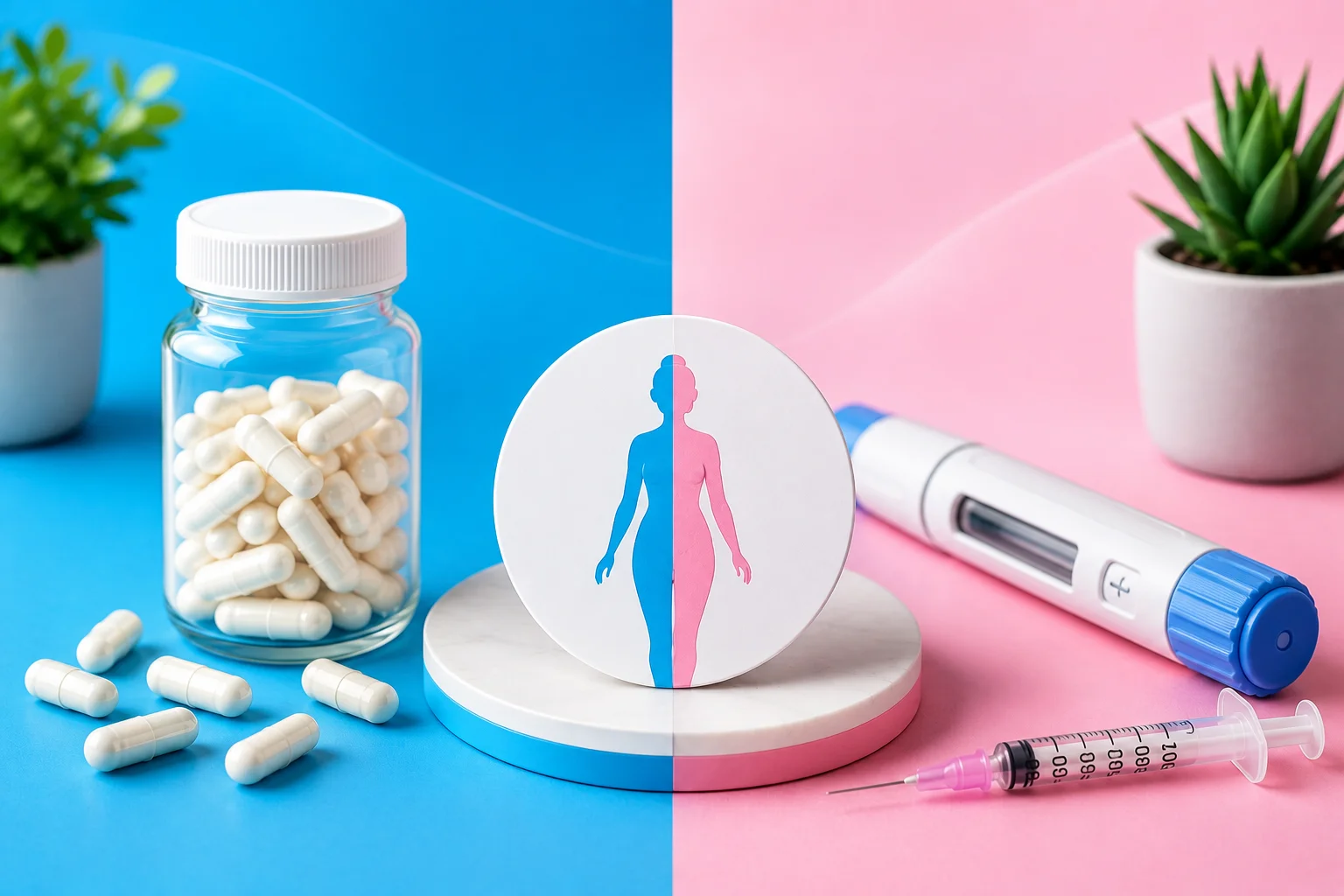
The Wegovy pill vs injection decision is no longer hypothetical. The once-daily Wegovy tablet was approved in the United States in December 2025, giving eligible adults a needle-free alternative to weekly injectable Wegovy.
The short answer is that neither form is automatically better for everyone. The 25 mg pill and established 2.4 mg injection produced similar average weight loss in separate medical studies. The pill may suit someone who strongly prefers tablets and can follow a strict morning routine. The injection may be better for someone who wants once-weekly dosing, more flexibility around meals, or an option approved for uses the tablet does not cover.
Injectable Wegovy also has a new 7.2 mg dose for certain adults who tolerate 2.4 mg but need additional weight reduction. It produced greater average weight loss than 2.4 mg in its supporting study, but it is not a starting dose or a head-to-head comparison with the pill.
The best choice depends on your health history, age, goals, other medications, daily routine, and semaglutide tolerance. This guide explains the evidence and practical differences.
Quick Comparison: Wegovy Pill vs Injection
| Feature | Wegovy pill | Wegovy injection |
| Active ingredient | Semaglutide | Semaglutide |
| Frequency | Once daily | Once weekly |
| How it is taken | Swallowed whole | Injected under the skin |
| Food requirements | Empty stomach in the morning, then wait at least 30 minutes | With or without food, at any time of day |
| Adult maintenance dose | 25 mg daily | Usually 1.7 or 2.4 mg weekly; 7.2 mg may be considered for certain adults |
| Weight-loss study average | About 14% over 64 weeks | About 15% with 2.4 mg over 68 weeks; about 19% with 7.2 mg over 72 weeks |
| Approved age group for weight reduction | Adults | Adults and adolescents aged 12 and older |
| Needle required | No | Yes |
| Storage | Original bottle at room temperature | Usually refrigerated, with limited room-temperature storage allowed |
| Best practical fit | People who prefer tablets and have a consistent morning routine | People who prefer weekly treatment and flexible timing |
These percentages come from different studies with different participants and designs. They are useful for context, but they do not prove that one formulation will work better for a particular person.
What Changed With Wegovy?
For several years, Wegovy was available only as a weekly injection. The FDA approved the oral 25 mg formulation on December 22, 2025, and it is now available in the United States.
The current Wegovy prescribing information confirms that the tablet is approved with a reduced-calorie diet and increased physical activity for adults with obesity, or adults with overweight and at least one weight-related condition. It is also approved to reduce major cardiovascular events in adults with established cardiovascular disease and obesity or overweight.
The injection has broader approved uses, including weight reduction in eligible adolescents aged 12 and older and treatment for certain adults with MASH and moderate to advanced liver fibrosis. The current label also permits a clinician to consider 7.2 mg for an adult who has tolerated 2.4 mg for at least four weeks and needs additional weight reduction.
How Do the Pill and Injection Work?
Both options contain semaglutide, so their basic effect in the body is the same. Semaglutide is a GLP-1 receptor agonist. It acts like a natural hormone involved in appetite, fullness, blood sugar regulation, and digestion.
It acts on appetite-related areas of the brain and slows how quickly food leaves the stomach. These effects may help people feel satisfied with smaller meals and manage appetite and food cravings more consistently.
The pill contains the absorption enhancer salcaprozate sodium, or SNAC, which helps oral semaglutide pass through the stomach lining. Oral absorption remains low, so the tablet requires more milligrams than the shot. A 25 mg tablet is not equivalent to injecting 25 mg.
Is the Wegovy Pill as Effective as the Injection?
The pill and standard 2.4 mg injection produced broadly similar average results, but there has not been a direct randomized study assigning people to oral Wegovy versus injectable Wegovy. Comparisons between the two rely on separate research.
Weight Loss With the Wegovy Pill
Research from the OASIS 4 study examined 307 adults with obesity, or overweight plus a related condition, who did not have type 2 diabetes. At 64 weeks, participants assigned to oral semaglutide 25 mg lost an estimated average of about 13.6% of their starting weight when the analysis included treatment discontinuation and other real-world-like events. The patient-facing result is commonly rounded to 14%.
Among participants who stayed on treatment as planned, average weight loss was 16.6%. These are two valid analyses of the same study, but they answer slightly different questions. Quoting only the higher number can make the result seem more certain than it is.
Weight Loss With the 2.4 mg Injection
Evidence from the STEP 1 study is based on 1,961 adults without diabetes. Participants assigned to weekly semaglutide 2.4 mg lost an average of 14.9% of their starting weight over 68 weeks, compared with 2.4% for placebo. Both groups also received lifestyle guidance.
The pill’s roughly 14% average and the 2.4 mg injection’s roughly 15% average look close. However, the studies differed in duration, sample size, and participants. A one-percentage-point difference between studies should not be treated as proof that the injection is superior.
Weight Loss With the 7.2 mg Injection
Findings from the STEP UP study showed an estimated average weight reduction of 18.8% with the 7.2 mg injection, compared with 15.5% for 2.4 mg and 3.9% for placebo over 72 weeks. Adults with type 2 diabetes were excluded from this research.
The higher-dose injection currently has the strongest average weight-loss result among these Wegovy options, but it is intended for selected adults after they have tolerated 2.4 mg. Greater average weight loss does not make it the best or safest dose for every patient. Tolerability and clinical need still matter.
Dosing and Daily Routine Differences
The practical routine may be more important than the small difference between average study results. A treatment cannot work as intended if its instructions are difficult to follow consistently.
Taking the Wegovy Pill
The tablet is taken once every morning on an empty stomach with no more than four ounces of plain water. It must be swallowed whole. You then wait at least 30 minutes before eating, drinking anything else, or taking another oral medication.
Treatment begins at 1.5 mg daily and generally increases every 30 days through 4 mg and 9 mg before reaching 25 mg. If a tablet is missed, skip it and resume the following day. Do not double the dose.
Taking the Wegovy Injection
The injection is given under the skin of the abdomen, thigh, or upper arm once a week. It can be used at any time of day, with or without food, as long as it is taken on the same day each week.
Treatment usually starts at 0.25 mg weekly and increases every four weeks to 0.5 mg, 1 mg, and 1.7 mg. Adult maintenance is usually 1.7 or 2.4 mg. The 7.2 mg dose may be considered only after at least four weeks at 2.4 mg when additional weight loss is clinically indicated.
Side Effects and Safety
Because both forms contain semaglutide, they share many side effects. The most common are nausea, diarrhea, vomiting, constipation, abdominal discomfort, bloating, indigestion, headache, fatigue, dizziness, belching, heartburn, and hair loss.
Digestive symptoms are often more noticeable while the dose is increasing. Eating slowly, stopping when comfortably satisfied, staying hydrated, and choosing smaller meals may help. Our guide to what to eat on semaglutide offers practical food choices for people managing reduced appetite or digestive discomfort.
The shot may cause an injection-site reaction. The pill avoids that issue, but not following its morning instructions can affect absorption. Both forms have also been associated with altered skin sensations.
Wegovy carries a boxed warning about thyroid C-cell tumors seen in rodents. It should not be used by anyone with a personal or family history of medullary thyroid carcinoma or with multiple endocrine neoplasia syndrome type 2.
Other risks include pancreatitis, gallbladder problems, dehydration-related kidney injury, severe gastrointestinal or allergic reactions, hypoglycemia with certain diabetes medicines, diabetic retinopathy complications, increased heart rate, and aspiration during anesthesia. Wegovy is not recommended for severe gastroparesis.
Semaglutide should not be combined with another semaglutide product or another GLP-1 receptor agonist. It should be discontinued when pregnancy is recognized for weight reduction or cardiovascular risk reduction, and the label advises stopping at least two months before a planned pregnancy.
The FDA also warns about unapproved and fraudulent GLP-1 products marketed for weight loss. Obtain Wegovy through a licensed prescriber and pharmacy rather than buying products labeled as semaglutide from an unverified seller.
Who May Prefer the Wegovy Pill?
The pill may be worth discussing if you:
- Strongly prefer to avoid needles
- Have experienced injection-site reactions
- Can follow the same empty-stomach routine every morning
- Do not have a complicated schedule of morning medicines
- Prefer room-temperature tablet storage
- Are an adult who meets the tablet’s approved criteria
Needle-free does not automatically mean easier. A daily tablet creates 365 dosing events per year, while a weekly injection creates 52. If mornings are rushed or unpredictable, the tablet’s fasting and waiting requirements may become a barrier.
Who May Prefer the Wegovy Injection?
The injection may be a better fit if you:
- Prefer once-weekly treatment
- Want freedom to take the medication with or without food
- Take important oral medicines first thing in the morning
- Have trouble remembering daily medication
- Are already doing well on injectable Wegovy
- Are aged 12 to 17 and meet treatment criteria
- Need an injection-only indication such as eligible MASH
- May be a candidate for 7.2 mg after tolerating 2.4 mg
Single-dose pens use a hidden needle, but they still require training, storage, and safe disposal.
Can You Switch Between the Wegovy Pill and Injection?
Switching is possible, but the two forms are not interchangeable dose for dose. Do not switch using a self-created schedule.
According to the current label, an adult taking 2.4 mg injectable Wegovy may switch to the 25 mg tablet one week after the final injection. Someone switching from the 25 mg tablet may generally begin a 2.4 mg weekly injection the day after the final tablet. A 1.7 mg injection may be considered when the 25 mg tablet is not tolerated.
Those instructions do not cover every situation. Lower doses, side effects, and diabetes medications may require a different plan, so a prescriber should manage the transition.
How to Choose the Better Option
Instead of asking which formulation is better in general, ask which one you can use safely and consistently.
Discuss these questions with your healthcare professional:
- Which Wegovy indications and doses apply to my age and health conditions?
- Can I reliably follow the tablet’s morning routine?
- Do my morning medications create a timing problem?
- How comfortable am I with a weekly injection?
- Which side effects have I experienced with semaglutide before?
- Do I need the flexibility of an injection-only dose or indication?
- Which formulation is covered by my insurance or realistically affordable?
Coverage, availability, and out-of-pocket cost can change. Check the current details with your insurance plan, pharmacy, and prescriber rather than assuming the pill or injection will always be cheaper.
When to Contact a Medical Professional
Talk with a qualified healthcare professional before starting, stopping, or switching Wegovy. A medical review is especially important if you have diabetes, diabetic retinopathy, kidney problems, a history of pancreatitis or gallbladder disease, severe digestive symptoms, upcoming surgery, or plans for pregnancy.
Seek prompt medical care for severe or persistent abdominal pain, repeated vomiting, signs of dehydration, symptoms of a serious allergic reaction, or other severe or rapidly worsening symptoms. Tell the surgical or anesthesia team that you take a GLP-1 medication before a planned procedure.
Final Thoughts: Is the Wegovy Pill or Injection Better?
For many eligible adults, the 25 mg pill and 2.4 mg injection offer broadly comparable average weight loss. The pill removes the needle but requires daily fasting and careful timing. The injection offers weekly dosing and more flexibility around meals and medicines.
The 7.2 mg injection may produce greater average weight loss for selected adults, but it is not a starting option or a direct comparison with the pill.
The better choice is the formulation that matches your approved medical needs, treatment goals, routine, tolerance, and ability to stay consistent. A personalized decision is more useful than choosing based on one study percentage.
READY TO TRANSFORM YOUR WELLNESS JOURNEY?
REAL Weight Loss & Wellness can review your health history, goals, medication routine, and previous weight-loss experience to help determine whether a medically supervised option may be appropriate for you.
FAQs
Is the Wegovy Pill FDA-Approved for Weight Loss?
Yes. The once-daily 25 mg Wegovy tablet is FDA-approved for weight reduction and long-term weight maintenance in eligible adults, along with a reduced-calorie diet and increased physical activity. It is also approved for cardiovascular risk reduction in certain adults with established cardiovascular disease and obesity or overweight.
Is the Wegovy Pill as Effective as the Shot?
The 25 mg pill and 2.4 mg injection produced similar average weight loss in separate studies, about 14% and 15%, respectively. There has not been a direct pill-versus-injection randomized study, so those figures should not be treated as a head-to-head result.
Does the Wegovy Pill Have Fewer Side Effects?
Not necessarily. Both contain semaglutide and share many digestive side effects, including nausea, vomiting, diarrhea, constipation, and abdominal discomfort. The pill avoids injection-site reactions, but it has strict administration requirements and can still cause significant side effects.
Can Teenagers Take the Wegovy Pill?
The tablet is approved for adults. Injectable Wegovy is approved for weight reduction in eligible adults and adolescents aged 12 and older. A pediatric healthcare professional should assess whether treatment is appropriate.
Can I Take the Wegovy Pill With Coffee?
No. The tablet should be taken on an empty stomach with up to four ounces of plain water. Wait at least 30 minutes before drinking coffee, eating, or taking other oral medications.
Can I Switch From the Wegovy Injection to the Pill?
Yes, some adults can switch under medical guidance. The current label provides a transition from the 2.4 mg injection to the 25 mg tablet, but people using other doses or managing side effects need individualized instructions from their prescriber.
Related Posts
- Semaglutide for Weight Loss: A Comprehensive and Simple Overview
- How Wegovy Helps Control Cravings and Supports Better Eating Habits
- What to Eat on Semaglutide: Complete Food List and Foods to Avoid
- How Much Weight Can You Lose in 3 Months on GLP-1?
- Where to Inject Semaglutide for Best Weight Loss Results